
A simple cotton wick dipped in a mixture of wax can transform a source of chemical energy into visible light, while also producing water vapor and carbon dioxide. Yet, the precise alignment between the wick length, the melting point of the wax, and the oxygen supply determines the stability of the flame. The combustion of a candle cannot be explained by mere melting or a single reaction. Several physical and chemical phenomena unfold, each playing a crucial role in the emergence and maintenance of light.
What lies behind the flame of a candle: understanding combustion
Behind the discreet silhouette of a candle lies a well-oiled mechanism: the wax, the wick, sometimes a fragrance, come into play. The wax, whether derived from paraffin, beeswax, or soy, forms the base. The wick, often woven from cotton, orchestrates the ballet. Together, they set the tone, slowly transforming matter into luminous glow and heat.
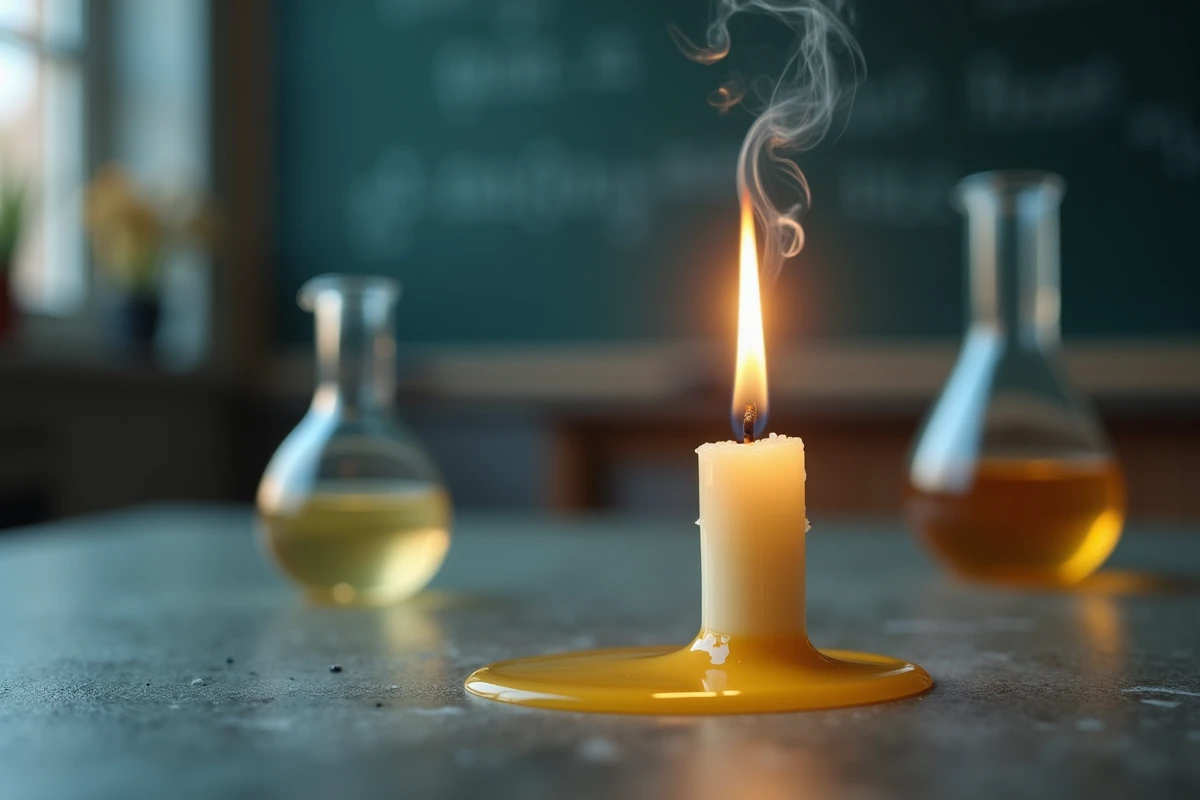
It all begins at the contact of the flame: the heat melts the wax close to the wick. Thanks to capillarity, the liquid wax climbs up the cotton, evaporates at the top, and encounters the oxygen in the air. There, the candle chemical reaction kicks in: the vaporized wax burns, releasing light and heat, but also carbon dioxide, carbon monoxide, water, and soot. This alchemy largely depends on the quality of the materials used and the environment: oxygen levels, ambient temperature, condition of the wick.
Look closely at the flame: it is not uniform. At its base, a blue zone concentrates oxygen and heat. Above, the main flame can reach up to 1400°C. Finally, the outer part, cooler, envelops the whole. If the flame leans towards yellow-orange, it is due to the carbon particles heated to white, a well-known effect, that of black body radiation.
To learn everything about candle combustion, one just needs to dissect this succession of reactions: the wax transforms, the heat rises, the light bursts forth. Every detail, the nature of the wax, the length of the wick, the quality of the air, matters. Science, here, nestles in the everyday, revealing the richness of an object often relegated to decor.
Why does the wax melt, and what is the role of the wick?
Nothing is left to chance in the birth of a flame. In the presence of heat, the wax begins its transformation. Its composition, whether paraffin, beeswax, soy, or rapeseed, influences how it reacts to heat. As it approaches the glowing wick, the solid wax melts into a small liquid pool. Its melting point, specific to each variety, will dictate the course of combustion.
The wick acts as a discreet conductor. Through capillarity, it absorbs the melted wax and transports it upwards, where heat awaits. The wax evaporates, meets the oxygen, and then burns. It is not the cotton that ignites directly, but rather the gas produced from the wax. The wick, meanwhile, erodes gently, pacing the life of the candle.
The balance is fragile: the wick length and the amount of melted wax must adjust. If the wick stretches too much, the flame flickers, spits soot, produces more carbon monoxide, especially with paraffin. If too short, the flame goes out. Vegetable waxes ensure a softer and cleaner combustion. Beeswax provides a warm light and minimal residue.
Here are some factors that influence this operation:
- Candle capillarity: ensures the rise of liquid wax to the flame
- Type of wax: impacts the cleanliness and stability of combustion
- Wick treatment and length: affect the intensity and regularity of the flame
The invisible chemical reactions: when light reveals science
Behind the tranquil glow, the chemical reaction operates relentlessly. The vaporized wax, guided by the wick, encounters the dioxide in the air. The combustion begins, releasing heat and light. But the candle does not stop there: it also emits carbon dioxide, carbon monoxide (in higher quantities with paraffin), water, and sometimes soot.
The flame itself is structured. Three main zones can be distinguished: a blue base, rich in oxygen, a bright central zone where the temperature rises to nearly 1400°C, and then an outer envelope, cooler. Its yellow-orange color results from the incandescence of carbon particles. This phenomenon, black body radiation, was explained by Antoine Guitton: light arises from heat, but partial combustion releases soot and carbon monoxide.
The constant renewal of oxygen relies on Archimedes’ thrust: the convection of air nourishes the flame, preventing suffocation. The nature of the wax, the treatment of the wick, the ambient air, each element shapes the quality of the combustion. Beeswax diffuses a warmer light and leaves little trace, while soy wax promotes a more homogeneous combustion and limits carbon dioxide.
Observing a candle is to see science at work, where matter, fire, and air together create a silent spectacle. Next time the flame flickers, think of all that is happening, invisible and fascinating, before your eyes.