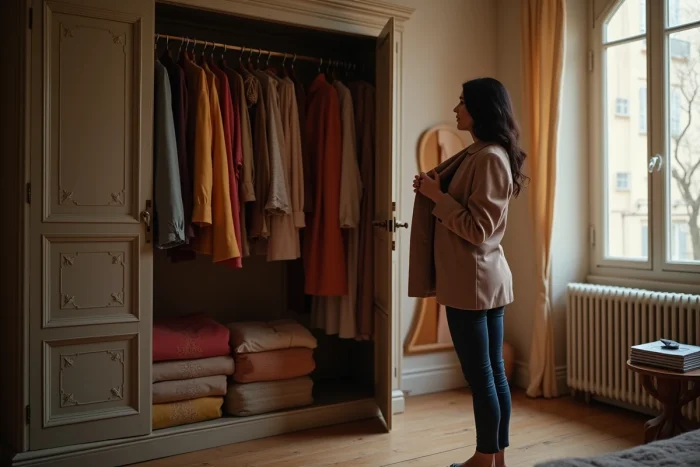
You have been wearing wide jeans and an oversized top for a few weeks. This change in silhouette probably didn’t come from a storefront or a magazine. It comes from your TikTok or Instagram feed. The relationship we have with fashion is no longer built in magazines or shop windows, but in a loop of digital recommendations that guide our clothing choices even before we are aware of it.
Fashion trend bubbles on TikTok: how the algorithm shapes your clothing choices
On TikTok, the flow of videos is not random. The algorithm analyzes every second of viewing, every like, every share, and then suggests increasingly targeted content. In fashion, this means that a user who watches two videos on the “quiet luxury” style will receive dozens of similar content within the hour.
This mechanism creates what we can call a fashion trend bubble. Inside this bubble, a style seems universal while it only circulates within a specific segment of users. You feel like everyone is wearing beige linen, but it’s your news feed that constructs this illusion.
The problem goes beyond a simple perception bias. This repeated exposure generates an almost addictive relationship: we check platforms to validate our choices, then we buy to conform to what the algorithm presents as the norm. The purchase-validation-exposure cycle shortens, and personal reflection on style gradually fades away. To explore fashion trends on Style and Chic, one must take a step back from these automated influence mechanisms.
Fast fashion and social media: the duo that accelerates trend adoption
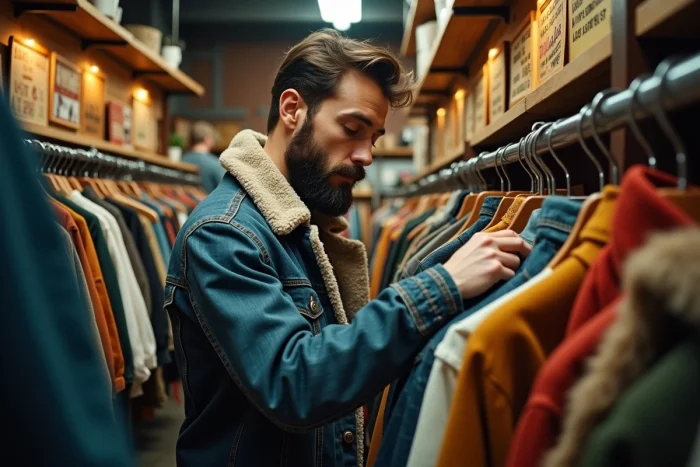
Fast fashion brands have understood how to take advantage of these algorithmic bubbles. When a micro-trend emerges on TikTok (a type of jacket, a pant cut, a specific color), corresponding collections appear online within days. This ultra-short production timeline did not exist ten years ago.
Social media sets the pace, brands adapt in real-time. The consumer finds themselves caught between two forces: an algorithm that shows them a garment everywhere, and a commercial offer that makes this garment immediately accessible, often at a low price.
What this changes for young consumers
Young generations are the most affected. Their discovery of fashion primarily occurs through social media, not through runway shows or specialized press. The vocabulary itself reflects this shift: we talk about “core” (gorpcore, balletcore, coastalcore) to designate aesthetics that are born and die within a few weeks.
Have you ever noticed that a trend you just adopted already seems “outdated”? This is a sign of a cycle of renewal accelerated by the social mechanics of the platforms. Each new “core” replaces the previous one, and the feeling of constant lag drives impulsive buying.
Slow fashion and resistance: another relationship with clothing is possible
In the face of this acceleration, some consumers adopt a different stance. Recent surveys show a growing preference for timeless pieces, even among those exposed to viral trends. Resistance to ultra-fast fashion is not marginal: it structures a relationship with fashion based on quality and durability rather than constant novelty.
This approach, often associated with the slow fashion movement, is based on a few concrete principles:
- Favor clothing made from sustainable materials, wearable across multiple seasons, instead of following every micro-trend
- Check the traceability of products, facilitated since the implementation of the Digital Product Passport in the European Union (regulation 2024/1781), which requires brands to document the sustainability of their items
- Build a stable personal style rather than reproducing the viral looks of the moment
The Digital Product Passport changes the game for European buyers. Specifically, each garment must now be accompanied by information about its composition, production chain, and environmental impact. This transparency slows down impulsive buying and allows for objective comparison of the quality of collections.

Relationship to fashion according to cultures: Europe versus Southeast Asia
The relationship to trends is not uniform across the globe. Recent comparative analyses reveal a notable gap between Europe and Southeast Asia. In Europe, trend adoption primarily occurs through social media and online press. In Southeast Asia, spiritual and community influences weigh more heavily in clothing choices.
This gap shows that fashion is not merely a commercial or algorithmic phenomenon. In some societies, clothing remains tied to collective practices, family codes, or religious markers that resist globalized trends.
What this implies for international brands
Brands targeting these markets cannot apply the same influence strategy everywhere. Viral content on TikTok France will not have the same effect in Indonesia or Vietnam, where the relationship to fashion incorporates dimensions that the algorithm does not measure.
This reality forces collections to diversify beyond simply following Western trends. Responsible consumers, regardless of their country, share a common point: they want to understand what they are wearing before buying it.
Regaining control over your fashion choices
Some simple actions can help you step out of the algorithmic loop without giving up the pleasure of dressing:
- Vary your sources of inspiration by consulting independent creators, thrift stores, or specialized blogs, not just your TikTok feed
- Set a reflection period before any purchase motivated by a trend seen online (48 hours is often enough to distinguish a lasting desire from an impulse)
- Favor brands that communicate about the traceability of their garments, in accordance with the new European obligations
- Accept wearing a “dated” garment according to social media standards, as a strong personal style lasts longer than a micro-trend
The relationship to fashion is evolving rapidly, driven by platforms whose mechanisms remain opaque to most users. Understanding how an algorithm guides your clothing choices is already regaining a degree of freedom in how you dress. The next time a trend seems omnipresent, check if it also exists outside your screen.