Nearly 500 new carpooling areas have emerged in France in 2023, according to the Ministry of Transport. However, some remain deserted during peak hours, while others struggle to meet demand.
The free parking for carpoolers does not always suffice to change travel habits. Behind this contrasting evolution, local authorities are seeking to adapt the offer to meet the needs for shared mobility that are more flexible, more accessible, and better integrated into daily life.
Carpooling today: a simple solution that changes the way we travel
Carpooling now occupies a central place in shared mobility. In the face of traffic jams and the climate emergency, it stands out as a direct response: sharing a car means reducing the number of vehicles on the roads, easing traffic, and limiting polluting emissions. Public authorities, from local governments to businesses, are multiplying support measures such as the Durable Mobility Package or the Green Fund. On the ground, this translates into an increase in incentive campaigns and concrete assistance to take action.
Specialized applications have changed the game. Finding a driver or a passenger for a trip has never been smoother. The routine of carpooling enthusiasts revolves around new markers that structure each week:
- dedicated parking lots,
- shared home-to-work trips,
- organization facilitated by digital tools.
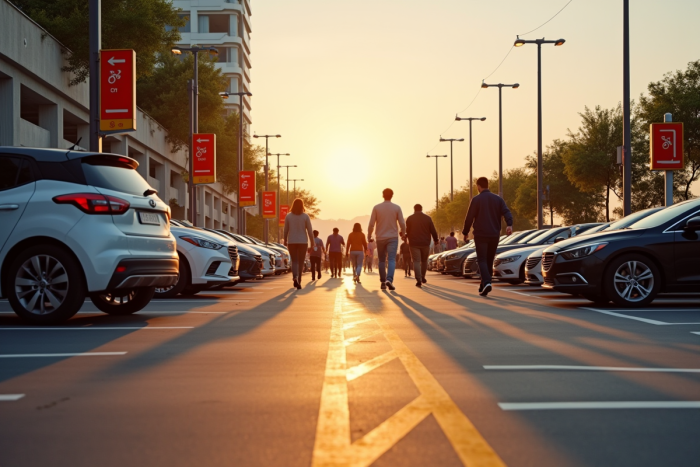
The Vinci Autoroutes carpooling parking in La Chapelle-Saint-Mesmin is a concrete illustration: a safe and marked place that becomes a reference point for regular users and structures shared mobility along a key axis.
Another strong point: carpooling adapts to all profiles. Whether traveling a few kilometers or tackling long distances, the formula is appealing. Its regulatory framework is now well defined, particularly through:
- the mobility orientation law,
- the transport code,
- encouraging taxation,
- adapted civil liability insurance.
Local authorities and the State continue to inject subsidies, while companies rethink their solutions for professional travel. This collective movement transforms the perception of daily commutes and questions the supremacy of solo driving.
Carpooling parking lots: why these spaces really facilitate shared mobility in daily life
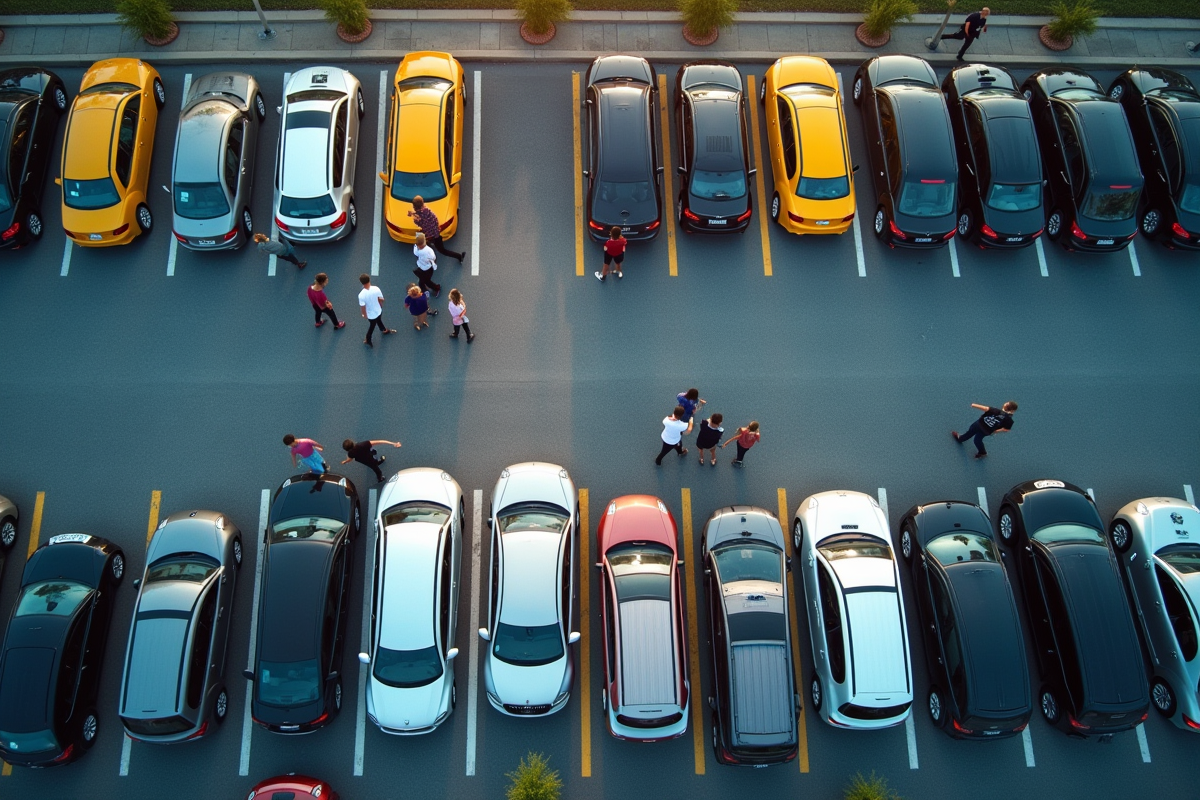
The carpooling parking lot is no longer a marginal detail. It has become a pivot of shared mobility. These spaces are designed to allow drivers and passengers to meet easily, without improvisation or wasted time. Shelter, signage, secure access: in many cases, everything has been designed to simplify the meeting and streamline the organization of shared trips. On the outskirts, at the entrance of an urban area, or on a heavily trafficked road, these parking lots make car sharing accessible, concrete, and above all, reliable on a daily basis.
Local authorities have not left this issue to chance. Their investment in the creation and management of these parking lots ensures coverage that is adapted to local realities. This notably involves:
- proximity to activity zones,
- coordination with other modes of transport,
- consideration of space constraints, which can be quite pronounced.
For many users, it is the solution to a complex equation: how to reach work or an activity hub when public transportation options do not keep up? These parking lots provide an answer where the traditional network stops, facilitating the shift to shared mobility.
Specifically, here’s what these spaces offer to everyone:
- A secure place to leave your car before boarding with others.
- Increased visibility, as they are listed in mobility applications and on carpooling platforms.
- Access made possible for residents of both urban and rural areas, thanks to a gradual rollout across the territory.
Collaboration between local authorities and digital services has allowed for further advancements. Now, these carpooling areas are integrated into booking applications, simplifying organization:
- no more hastily arranged meetings in a supermarket parking lot, but infrastructures designed for sustainable mobility.
Trust is growing, shared trips are becoming a habit, and the road is clearing, one vehicle at a time. The transformation is underway, sometimes discreetly, but very much real.