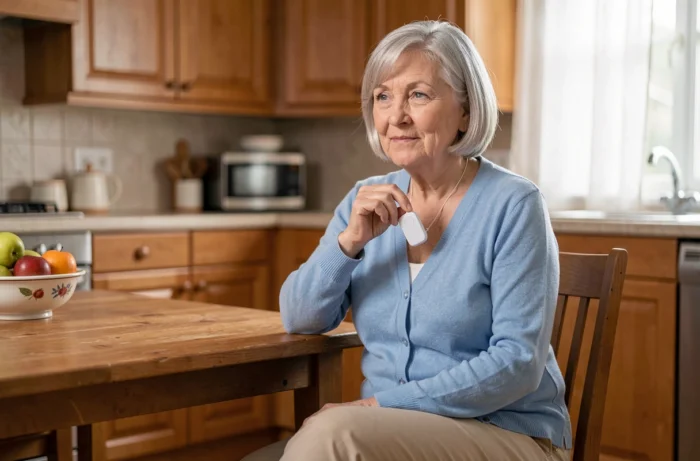
Choosing a teleassistance service for an elderly loved one is no longer just about comparing the price of an alarm button. Health insurance providers are now integrating these devices into broader offers, combining teleconsultation, treatment monitoring, and preventive support. This change alters the selection criteria: the ecosystem of connected services is just as important as the equipment itself.
Teleassistance and health insurance: comparative table of coverage methods
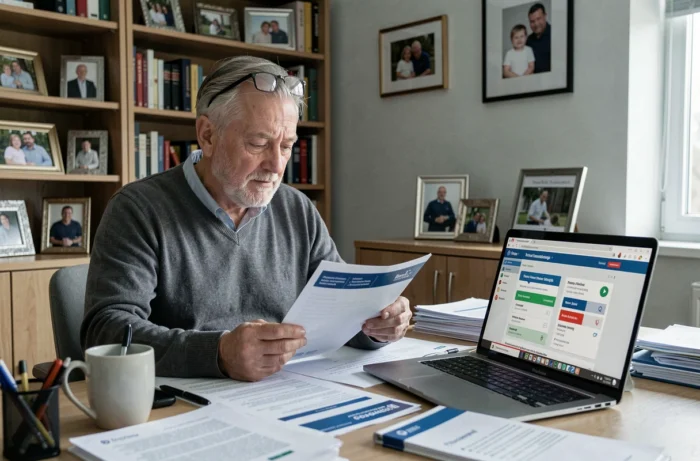
Not all health insurance providers finance teleassistance in the same way. Three models coexist, and the choice of contract determines both the out-of-pocket costs and the freedom to choose a provider.
| Coverage method | How it works | Freedom to choose provider |
|---|---|---|
| Dedicated annual package | The insurance pays a fixed amount per year, applicable to the subscription or installation | Free: the senior chooses the provider they want |
| Integrated partnership | The teleassistance service is included in the contract, with no upfront costs | Restricted: the provider is imposed by the insurance |
| Reimbursement upon receipt | The insurance reimburses part of the bill after the receipt is sent | Free, but the reimbursement rate varies by provider |
The integrated partnership model is rapidly developing. Some health insurance providers, in their 2026 offers, no longer just reimburse: they directly integrate health digital services with no upfront costs, including teleassistance, teleconsultation, and support platforms. This requires checking a point often overlooked: the quality of the partner provider, which one has not chosen themselves.
To identify suitable plans, it is useful to compare the services offered by Manifeste Sante before committing to a specific health insurance contract.
Technical criteria for a senior teleassistance subscription: what affects reliability
The equipment varies little from one provider to another in appearance: a voice box, an alert button worn on the wrist or as a pendant, a connection to a listening center. The reliability gaps lie elsewhere.
Automatic fall detection and false positives
Devices equipped with an accelerometer detect falls without the senior pressing the alarm button. This is a real advantage for individuals with cognitive disorders. However, low-quality sensors generate alerts with every sudden movement, which leads some users to remove their bracelet out of frustration.
Before subscribing, ask the provider for the false positive rate of their device. If this information is not available, it is a warning sign in itself.
Mobile teleassistance with geolocation
For seniors who go out regularly, a service limited to the home is not enough. Mobile solutions include GPS and allow for alerts to be triggered outdoors. The decisive criterion here is: the network coverage of the mobile device in rural areas. A device connected in 4G will be useless in a poorly covered municipality.
- Check that the device works on the mobile network available at the senior’s address, not just in urban areas
- Prefer a device with a battery life of over 48 hours to avoid forgetting to recharge
- Ensure that geolocation remains active even when the senior has not triggered the alert, to allow for quick location by relatives
Solidarity health supplement and teleassistance: an underutilized lever
Articles on teleassistance often mention assistance from pension funds or departmental councils. One device remains little connected to teleassistance in comparisons: the Solidarity Health Supplement (C2S).
The C2S covers part of health expenses for individuals with modest incomes. In mainland France, for a single person, the annual ceiling for a free C2S is set at 10,421 euros, and for a C2S with financial participation at 14,069 euros. These amounts are increased in overseas territories.
The C2S does not directly finance a teleassistance subscription. However, it frees up the health budget by eliminating out-of-pocket costs for consultations, optics, or dental care. For a senior whose health insurance does not cover teleassistance, this saving can finance the monthly subscription to an alarm service.
The rate of non-use of the C2S remains high. Many eligible seniors do not apply for it, either due to lack of knowledge or because the administrative process seems complex. Checking eligibility before comparing teleassistance offers allows for a broader real budget.
Connected service packages from health insurance providers: a central selection criterion
Classic teleassistance (box, pendant, fall detector) remains the foundation of the system. What distinguishes the offers in 2026 is the ecosystem surrounding this foundation.
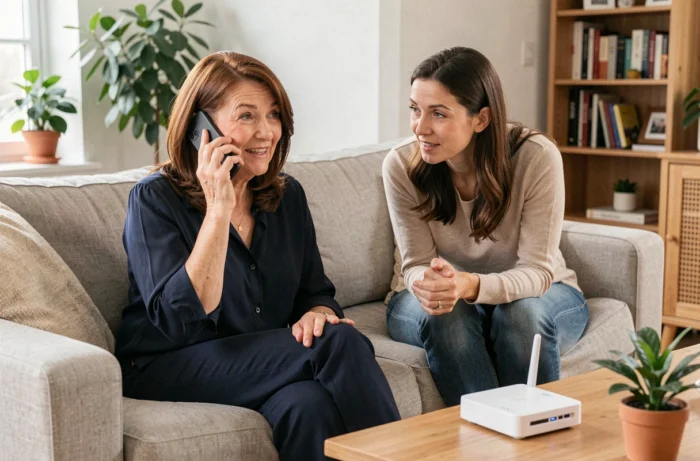
Some health insurance providers now offer a comprehensive package including telemedicine, preventive coaching, and treatment monitoring in addition to teleassistance. The benefit for the senior goes beyond comfort: coordination between the teleassistance platform and the attending physician allows for a more tailored response in case of an alert.
A concrete example: when a fall is detected, if the listening platform has access to the senior’s follow-up file (ongoing treatments, known pathologies), it transmits this information to emergency services. The response is faster and more relevant.
- Check if the health insurance contract includes a 24/7 support platform coordinated with the teleassistance device
- Ask if the senior’s health data is shared with the listening center (and under what confidentiality conditions)
- Compare the number of teleconsultations included in the contract, as they reduce travel for seniors with reduced mobility
The deciding factor between two comparable offers is no longer the price of the alarm button. It is the ability of the health insurance contract to coordinate teleassistance, medical follow-up, and prevention within the same ecosystem. A cheaper subscription but isolated from any medical follow-up exposes the senior to fragmented care in case of emergency.