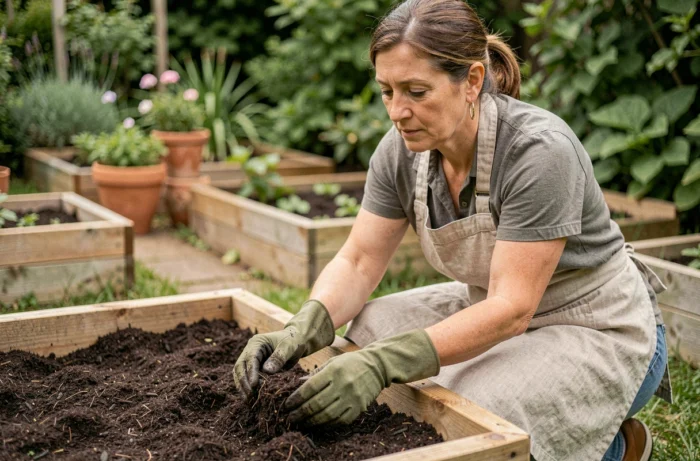
Peat is sold in bags at all garden centers, often mixed with potting soil. Many gardeners use it without really knowing what it brings to the soil, or when it becomes unnecessary. Understanding its nature and limits allows for its wise use, without wasting a resource whose extraction raises real ecological questions.
Blonde peat or black peat: two materials, two uses in the garden
Peat is not a uniform product. Depending on its degree of decomposition, it comes in two forms with very different properties.
Blonde peat comes from the upper layers of peat bogs. It is fibrous, lightweight, very acidic (pH around 3.5 to 4.5), and retains several times its weight in water. This is the type found in substrates for sowing or for acid-loving plants like rhododendrons, hydrangeas, or blueberries.
Black peat, deeper and more decomposed, has a fine, almost earthy texture. Its pH is less acidic, and its water retention capacity is lower. It is mainly used as an amendment to improve the structure of compact soil.
Have you ever noticed that low-quality potting soil compacts quickly in the pot? This is often because it contains a high proportion of black peat, which compacts over time. For sowing and repotting, blonde peat is more suitable due to its airy structure.
To delve deeper into the topic, there are good gardening tips on Tout pour le Jardin that detail the dosages according to the situations.
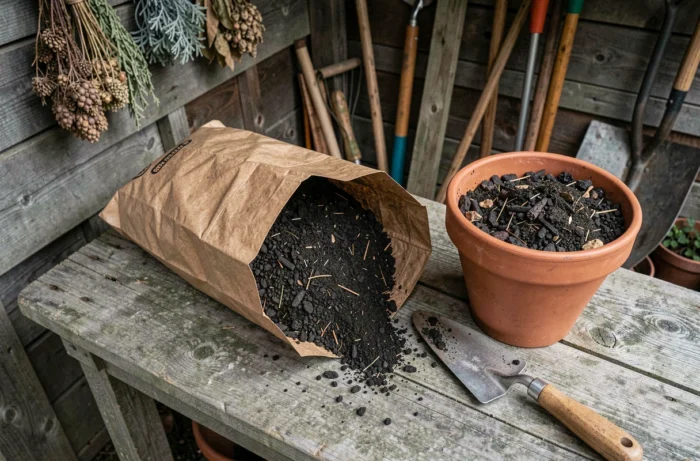
Mixing peat and garden soil: effective dosages
Using pure peat is a common mistake. It provides almost no nutrients. Its role is to improve the physical structure of the soil, not to feed the plants.
Lightening clay soil
A heavy, sticky soil in winter benefits from an addition of blonde peat mixed with compost. Peat aerates the soil, compost nourishes it: the two complement each other. The mixture is incorporated on the surface, in the top fifteen centimeters, in autumn or early spring.
Preparing a substrate for sowing
For sowing in pots or trays, a classic mix combines blonde peat, fine sand, and a small amount of sifted compost. Peat ensures a moist and light environment where young roots can easily develop. Moisten the peat before mixing, as when dry, it repels water instead of absorbing it. This hydrophobic phenomenon often surprises beginners.
Mulching and acidifying around heathland plants
Camelias, azaleas, and heathers thrive in acidic soil. A mulch of blonde peat around the base maintains acidity and keeps the soil cool. The thickness should not exceed a few centimeters to avoid the formation of an impermeable crust.
Environmental impact of peat: what gardeners need to know
Peat bogs take millennia to form. They store a considerable amount of carbon. When peat is extracted, this carbon is released into the atmosphere. The destruction of these wetlands also threatens rare ecosystems, including certain species of sphagnum and nesting birds.
Germany plans to end peat use in amateur gardening by 2026 and a largely advanced phase-out in professional horticulture by 2030. This regulatory signal is pushing European manufacturers to reformulate their potting soils.
In France, no comparable ban exists at the moment. However, the Peat Relay and several local authorities are encouraging the transition to peat-free substrates. Regulatory pressure is likely to increase in the coming years.
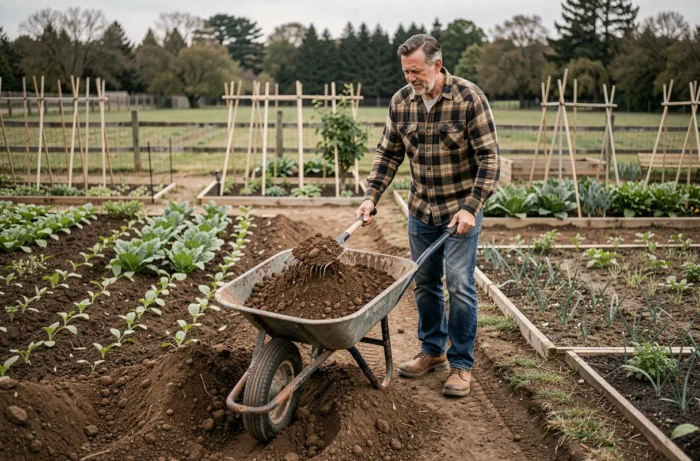
Alternatives to peat: compost, wood fiber, and coconut fiber
No substitute exactly replicates the behavior of peat. According to research conducted at the Fachhochschule Weihenstephan-Triesdorf, each alternative has its own characteristics of water retention, pH, and structure. A one-to-one replacement may require adjustments in watering and fertilization.
Here are the main available alternatives:
- Compost from green waste: this is the most commonly used alternative by local authorities. It nourishes the soil, improves its structure, but its pH is neutral to alkaline, making it unsuitable for acid-loving plants without correction.
- Wood fiber and bark humus: they lighten the substrate well and decompose slowly. Their water retention remains lower than that of blonde peat, which necessitates more frequent watering.
- Coconut fiber: excellent water retention capacity, pH close to neutrality. Its carbon footprint depends on transport from tropical production areas.
- Municipal mixes (compost, sand, lava, miscanthus): some municipalities produce local peat-free substrates suitable for green spaces. Their availability varies by region.
For sowing, a mix of coconut fiber and sifted compost yields results close to peat, provided that watering frequency is adjusted. To acidify a bed, composted pine needles or elemental sulfur effectively replace blonde peat.
When peat remains relevant and when to do without it
Peat still holds real interest in a few specific situations: the cultivation of carnivorous plants (which require a very acidic and poor substrate), the propagation by sowing of delicate varieties, or the occasional correction of a soil that is too calcareous for heathland plants.
For all other common uses (repotting, mulching, soil improvement), compost combined with plant fibers meets most needs. Peat-free labeled potting soils are multiplying in garden centers, and their quality is improving each year.
The choice boils down to a simple question: does your soil or your plants need acidity and exceptional water retention? If so, blonde peat remains hard to replace. If not, local alternatives perform just as well, if not better in terms of fertility, while preserving fragile ecosystems.